G. Fox and Co.
American, 1847 - 1993
Names
- G. Fox and Co.
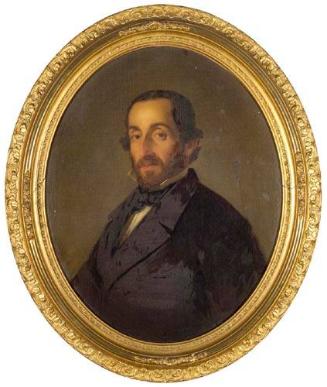
BiographyThe story of G. Fox & Co. and the Fox family appropriately begins with Gerson Fox, after whom the store was named*. Born on December 14, 1811 in Bekunstadt, Germany**, Gerson Fox immigrated to the United States and settled in Hartford, by most accounts, in the 1830s, although other sources place his arrival in Hartford as late as the mid-1840s. According to the records of Congregation Beth Israel, of which he was a founding member, Gerson Fox came to Hartford in 1830, began as a peddler, and later, with his brother Isaac Fox, established a small fancy goods store at 126 ½ Main Street. Gerson married Hannah Bamberger around 1848 and they had five children together: Leopold, Moses, Anna (who died young), Emma, and Isaac. Hannah Bamberger Fox died on December 12, 1875 and almost five years after his wife, on August 22, 1880, Gerson Fox died as well.
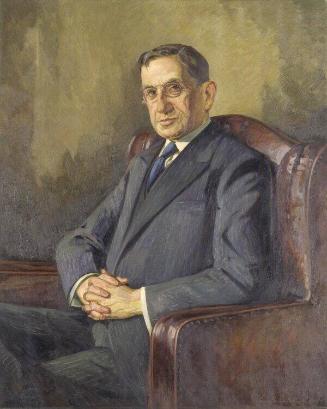
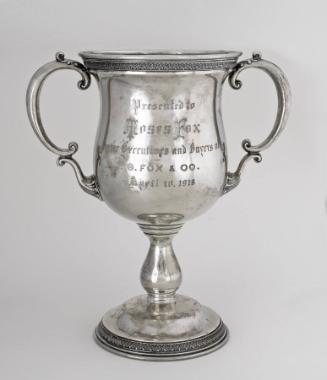
It was Gerson’s second son, Moses, who would take over the family business and become the department store dynamo who would build G. Fox & Co. into the largest family-owned retail store in the country. Because of his modest nature and strong aversion toward personal publicity, details concerning his private life are scarce. Moses Fox was born in Hartford on December 26, 1850. He attended Brown School until age 13, when he left school and went to work for his father. When Gerson Fox died in 1880, Moses Fox became president, a position he would hold for the rest of his life. After the death of his first wife, Sophie Korn, with whom he had one daughter, Sophie, who died in childhood, Moses married Theresa Stern. Moses and Theresa had two children, Beatrice and Fannie. Moses became sole owner of G. Fox & Co. in 1917, the same year a fire destroyed his department store. Despite opinions from friends that he should retire after this calamity, Moses Fox was determined to rebuild his store. In just over a year, a new 11-story fireproof building was ready for business. Moses Fox would continue to head the company, leading it into a period of growth and tremendous success, for the rest of his life. In January of 1938, at the age of 87, Moses Fox died after a short illness. His wife, Theresa, had died six years previous in January of 1932.
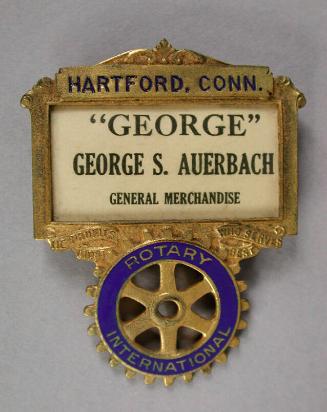
Beatrice Fox Auerbach, who would succeed her father as president of G. Fox & Co. after his death, was born Hannah Beatrice Fox on July 17, 1887. After her marriage to George S. Auerbach on April 5, 1911, Beatrice moved to Salt Lake City, Utah where her new husband was involved in his family’s retail firm, F. Auerbach & Brother. When the G. Fox & Co. building burned down, Beatrice returned to Hartford with her husband and young daughter, Georgette, so that George could help his father-in-law rebuild. A few years later, Beatrice and George welcomed a second daughter, Dorothy. George’s sudden, untimely death in November of 1927 prompted Beatrice to become involved in the operations of her family’s store. Beginning in a part-time capacity and originally intending to only remain temporarily, Beatrice became so interested in the business that she remained as manager and vice-president of the company. When Moses Fox died in 1938, Beatrice became president of G. Fox & Co., a position she retained even after she sold the business to the May Co. in 1965. On November 29, 1968, Beatrice Fox Auerbach died in Hartford. Her astute business mind was matched only by her generous heart and the objects of her philanthropy continue to benefit from her altruism today, almost forty years after her death.
As stated above, Beatrice and George Auerbach had two daughters, Georgette and Dorothy. Their elder daughter, Georgette, was born in Salt Lake City, Utah on May 14, 1916. In June of 1940, she married Richard Koopman, a businessman who was active in G. Fox & Co. until just before his death in 1987. Georgette and Richard Koopman had six children: George, Rena Beatrice, Harry, Dorothy Brooks, Richard, Jr., and Beatrice (or Trice, as she was more commonly known). Georgette was known in the Hartford community for her active civic involvement and extensive philanthropy. She died in April, 2004.
Georgette’s sister, Dorothy, was born in Hartford on October 14, 1919. She married Bernard Schiro in August of 1940. Like his brother-in-law, Bernard helped to run G. Fox & Co and was on the board of directors of the May Department Stores Co. after the merger of G. Fox and the May Company. Dorothy and Bernard also had six children: Susan, Linda, Robert, Helen, Elizabeth, and Jean. Dorothy died on December 29, 1998 and Bernard died a few years later on January 18, 2001.
*There are variations in the spelling of Gerson Fox’s name. Often, Gerson is spelled Gershon and his last name before becoming Anglicized was spelled Fuchs.
**The town, Bekunstadt has also appeared as Burgkunstadt. There are also sources that list his origin as Bayern or Bavaria.
_ _ _
The Company
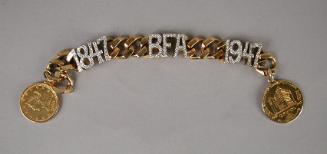
The company’s history in many ways mirrors that of the family who founded it. As stated previously, G. Fox & Co. was founded in 1847 by the Fox brothers, Gerson and Isaac, as a one-room store on Main Street. Not long after its founding, a lack of space forced the company to expand into a store on the corner of Church and Main Streets. Shortly before his death, Gerson Fox, who had long been the sole proprietor of the store after his brother returned to New York City, began an expansion plan that included building a four-story brick building on the East side of Main Street. In 1880, before construction had been completed, Gerson Fox died and Moses Fox succeeded his father as president of the company. Store expansion continued and by 1915 G. Fox & Co. occupied five buildings. On January 29, 1917, a disastrous conflagration swept through the G. Fox property, destroying the records, merchandise, and building interiors. It must have looked like the end of the seventy-year-old institution to many of the onlookers watching the fire that night. Moses Fox, however, was determined to rebuild, especially after receiving the support of the community as customers arrived at the temporary offices Moses Fox had set up in neighboring businesses to pay their bills. Because all records had been lost in the fire, customers paid, as Beatrice Fox Auerbach would later say, "from memory and from their hearts."
While there was a lot of speculation at the time that the decision to rebuild would lead to the disasterous end of Moses Fox’s business career – some even referred to the effort as ‘Fox’s Folly’ – Moses Fox strongly believed in his company and in the community in which it operated. About three months after the fire, construction began on the replacement building and by February, 1918 the new structure was in full operation. Even more remarkable was the fact that from the time of the fire until the opening of the new building, all G. Fox & Co. employees were kept on the payroll and the company resumed business in temporary quarters scattered in buildings throughout the city within days of the fire. The resulting structure was an eleven story, fireproof building that was connected by an underground tunnel to the merchandise warehouse. According to a 1929 newspaper article, "Many felt that the fire, despite its terrible destruction, had borne excellent fruit."
The fire not only resulted in a new, more elaborate home for G. Fox & Co., but also brought Moses Fox’s daughter back to Hartford. Beatrice Fox Auerbach returned to her hometown so her husband, George S. Auerbach, could assist Moses Fox in reestablishing the company as a force in the retail world. Another tragic event, the death of George S. Auerbach in 1927, also somewhat serendipitously propelled the company in a positive direction. Beatrice Fox Auerbach, who as a young woman had worked in G. Fox & Co. as a sales clerk before her marriage in 1911, began working part-time in the company after the death of her husband in 1927. She was so fascinated with the work that she soon began employment with the company full-time, working side by side with her father. When Moses Fox died in 1938, Beatrice Fox Auerbach became the third President of the retail store.
As a business woman and leader in the retail community, Beatrice Fox Auerbach was innovative (by establishing a five-day work week, providing employee benefits unheard of at the time and creating advancement opportunities for minorities), challenging (she had high expectations of her employees including the following demands: all managers were required to be on floor at all times on Saturdays, salespersons were expected to be extremely knowledgeable of all items sold, cleanliness and order were required, and all merchandise had to be in stock in a wide variety of sizes, colors, styles, and prices) and generous (she instituted daily Family Circle Luncheons so that management could regularly meet with employees, established the Theresa Stern Fox Fund to aid employees in emergencies or illness, and provided an employee cafeteria where all food was sold at cost). Perhaps the driving force behind her actions was her steadfast devotion to her grandfather’s and father’s most revered creed: "Honesty, Courtesy, and Service."
Shortly after taking the reins of the company, Beatrice Fox Auerbach instigated the first of her many innovative ideas when, in 1939, she began the Moses Fox Club, a program that honored employees who had been with the company for 25 years or more. For the hundredth anniversary of the founding of the company, Beatrice Fox Auerbach initiated a year-long Centennial Celebration that included newspaper advertisements detailing the past century of "Connecticut Living," published books, window displays, and a day when all deliveries were made by helicopter. Beatrice Fox Auerbach’s presidency coincided with the heyday of G. Fox & Co. In 1956, for instance, the Hartford store was reported to employ between 3,000 and 4,000 staff members, receive as many as 25,000 calls to its switchboard daily, and maintain a fleet of 147 delivery vehicles that delivered over 2,000,000 packages a year.
The year 1965 marked the end of an era when Beatrice Fox Auerbach sold G. Fox & Co., the largest privately-owned department store in New England, to the May Department Stores Co. for a reported $40 million. She remained President of the company her grandfather had founded until shortly before her death in 1968. Beatrice Fox Auerbach’s passing may have sounded the death knell in the end of an era whose downfall began three years earlier with the May merger, but it did not mark the immediate end of the retail giant. For several years, the store even continued its pattern of expansion, this time into branch stores throughout the state and into Massachusetts and Rhode Island. The opening of branch stores, however, highly impacted the health of the downtown Hartford store.
In 1992, the May Co. announced its intention to close the Main Street store in Hartford while all branch stores that still had the Fox name would become Filene’s stores. In January 1993, G. Fox & Co. closed its downtown doors after an impressive 145 year history. In fact, G. Fox & Co. was Hartford’s last remaining department store in the downtown area. The Main Street building was later donated by the May Co. to the City of Hartford. Several redevelopment projects were considered, but all stalled until finally, in 2002, construction began by developer Anthony Autorino to renovate the building, which is now occupied primarily by Capital Community College.
It was Gerson’s second son, Moses, who would take over the family business and become the department store dynamo who would build G. Fox & Co. into the largest family-owned retail store in the country. Because of his modest nature and strong aversion toward personal publicity, details concerning his private life are scarce. Moses Fox was born in Hartford on December 26, 1850. He attended Brown School until age 13, when he left school and went to work for his father. When Gerson Fox died in 1880, Moses Fox became president, a position he would hold for the rest of his life. After the death of his first wife, Sophie Korn, with whom he had one daughter, Sophie, who died in childhood, Moses married Theresa Stern. Moses and Theresa had two children, Beatrice and Fannie. Moses became sole owner of G. Fox & Co. in 1917, the same year a fire destroyed his department store. Despite opinions from friends that he should retire after this calamity, Moses Fox was determined to rebuild his store. In just over a year, a new 11-story fireproof building was ready for business. Moses Fox would continue to head the company, leading it into a period of growth and tremendous success, for the rest of his life. In January of 1938, at the age of 87, Moses Fox died after a short illness. His wife, Theresa, had died six years previous in January of 1932.
Beatrice Fox Auerbach, who would succeed her father as president of G. Fox & Co. after his death, was born Hannah Beatrice Fox on July 17, 1887. After her marriage to George S. Auerbach on April 5, 1911, Beatrice moved to Salt Lake City, Utah where her new husband was involved in his family’s retail firm, F. Auerbach & Brother. When the G. Fox & Co. building burned down, Beatrice returned to Hartford with her husband and young daughter, Georgette, so that George could help his father-in-law rebuild. A few years later, Beatrice and George welcomed a second daughter, Dorothy. George’s sudden, untimely death in November of 1927 prompted Beatrice to become involved in the operations of her family’s store. Beginning in a part-time capacity and originally intending to only remain temporarily, Beatrice became so interested in the business that she remained as manager and vice-president of the company. When Moses Fox died in 1938, Beatrice became president of G. Fox & Co., a position she retained even after she sold the business to the May Co. in 1965. On November 29, 1968, Beatrice Fox Auerbach died in Hartford. Her astute business mind was matched only by her generous heart and the objects of her philanthropy continue to benefit from her altruism today, almost forty years after her death.
As stated above, Beatrice and George Auerbach had two daughters, Georgette and Dorothy. Their elder daughter, Georgette, was born in Salt Lake City, Utah on May 14, 1916. In June of 1940, she married Richard Koopman, a businessman who was active in G. Fox & Co. until just before his death in 1987. Georgette and Richard Koopman had six children: George, Rena Beatrice, Harry, Dorothy Brooks, Richard, Jr., and Beatrice (or Trice, as she was more commonly known). Georgette was known in the Hartford community for her active civic involvement and extensive philanthropy. She died in April, 2004.
Georgette’s sister, Dorothy, was born in Hartford on October 14, 1919. She married Bernard Schiro in August of 1940. Like his brother-in-law, Bernard helped to run G. Fox & Co and was on the board of directors of the May Department Stores Co. after the merger of G. Fox and the May Company. Dorothy and Bernard also had six children: Susan, Linda, Robert, Helen, Elizabeth, and Jean. Dorothy died on December 29, 1998 and Bernard died a few years later on January 18, 2001.
*There are variations in the spelling of Gerson Fox’s name. Often, Gerson is spelled Gershon and his last name before becoming Anglicized was spelled Fuchs.
**The town, Bekunstadt has also appeared as Burgkunstadt. There are also sources that list his origin as Bayern or Bavaria.
_ _ _
The Company
The company’s history in many ways mirrors that of the family who founded it. As stated previously, G. Fox & Co. was founded in 1847 by the Fox brothers, Gerson and Isaac, as a one-room store on Main Street. Not long after its founding, a lack of space forced the company to expand into a store on the corner of Church and Main Streets. Shortly before his death, Gerson Fox, who had long been the sole proprietor of the store after his brother returned to New York City, began an expansion plan that included building a four-story brick building on the East side of Main Street. In 1880, before construction had been completed, Gerson Fox died and Moses Fox succeeded his father as president of the company. Store expansion continued and by 1915 G. Fox & Co. occupied five buildings. On January 29, 1917, a disastrous conflagration swept through the G. Fox property, destroying the records, merchandise, and building interiors. It must have looked like the end of the seventy-year-old institution to many of the onlookers watching the fire that night. Moses Fox, however, was determined to rebuild, especially after receiving the support of the community as customers arrived at the temporary offices Moses Fox had set up in neighboring businesses to pay their bills. Because all records had been lost in the fire, customers paid, as Beatrice Fox Auerbach would later say, "from memory and from their hearts."
While there was a lot of speculation at the time that the decision to rebuild would lead to the disasterous end of Moses Fox’s business career – some even referred to the effort as ‘Fox’s Folly’ – Moses Fox strongly believed in his company and in the community in which it operated. About three months after the fire, construction began on the replacement building and by February, 1918 the new structure was in full operation. Even more remarkable was the fact that from the time of the fire until the opening of the new building, all G. Fox & Co. employees were kept on the payroll and the company resumed business in temporary quarters scattered in buildings throughout the city within days of the fire. The resulting structure was an eleven story, fireproof building that was connected by an underground tunnel to the merchandise warehouse. According to a 1929 newspaper article, "Many felt that the fire, despite its terrible destruction, had borne excellent fruit."
The fire not only resulted in a new, more elaborate home for G. Fox & Co., but also brought Moses Fox’s daughter back to Hartford. Beatrice Fox Auerbach returned to her hometown so her husband, George S. Auerbach, could assist Moses Fox in reestablishing the company as a force in the retail world. Another tragic event, the death of George S. Auerbach in 1927, also somewhat serendipitously propelled the company in a positive direction. Beatrice Fox Auerbach, who as a young woman had worked in G. Fox & Co. as a sales clerk before her marriage in 1911, began working part-time in the company after the death of her husband in 1927. She was so fascinated with the work that she soon began employment with the company full-time, working side by side with her father. When Moses Fox died in 1938, Beatrice Fox Auerbach became the third President of the retail store.
As a business woman and leader in the retail community, Beatrice Fox Auerbach was innovative (by establishing a five-day work week, providing employee benefits unheard of at the time and creating advancement opportunities for minorities), challenging (she had high expectations of her employees including the following demands: all managers were required to be on floor at all times on Saturdays, salespersons were expected to be extremely knowledgeable of all items sold, cleanliness and order were required, and all merchandise had to be in stock in a wide variety of sizes, colors, styles, and prices) and generous (she instituted daily Family Circle Luncheons so that management could regularly meet with employees, established the Theresa Stern Fox Fund to aid employees in emergencies or illness, and provided an employee cafeteria where all food was sold at cost). Perhaps the driving force behind her actions was her steadfast devotion to her grandfather’s and father’s most revered creed: "Honesty, Courtesy, and Service."
Shortly after taking the reins of the company, Beatrice Fox Auerbach instigated the first of her many innovative ideas when, in 1939, she began the Moses Fox Club, a program that honored employees who had been with the company for 25 years or more. For the hundredth anniversary of the founding of the company, Beatrice Fox Auerbach initiated a year-long Centennial Celebration that included newspaper advertisements detailing the past century of "Connecticut Living," published books, window displays, and a day when all deliveries were made by helicopter. Beatrice Fox Auerbach’s presidency coincided with the heyday of G. Fox & Co. In 1956, for instance, the Hartford store was reported to employ between 3,000 and 4,000 staff members, receive as many as 25,000 calls to its switchboard daily, and maintain a fleet of 147 delivery vehicles that delivered over 2,000,000 packages a year.
The year 1965 marked the end of an era when Beatrice Fox Auerbach sold G. Fox & Co., the largest privately-owned department store in New England, to the May Department Stores Co. for a reported $40 million. She remained President of the company her grandfather had founded until shortly before her death in 1968. Beatrice Fox Auerbach’s passing may have sounded the death knell in the end of an era whose downfall began three years earlier with the May merger, but it did not mark the immediate end of the retail giant. For several years, the store even continued its pattern of expansion, this time into branch stores throughout the state and into Massachusetts and Rhode Island. The opening of branch stores, however, highly impacted the health of the downtown Hartford store.
In 1992, the May Co. announced its intention to close the Main Street store in Hartford while all branch stores that still had the Fox name would become Filene’s stores. In January 1993, G. Fox & Co. closed its downtown doors after an impressive 145 year history. In fact, G. Fox & Co. was Hartford’s last remaining department store in the downtown area. The Main Street building was later donated by the May Co. to the City of Hartford. Several redevelopment projects were considered, but all stalled until finally, in 2002, construction began by developer Anthony Autorino to renovate the building, which is now occupied primarily by Capital Community College.
Person TypeCorporate Entity
Terms