

Interview with Sydney Smith
Date3 October 2025
Mediumborn digital audio file
DimensionsDuration: 43 Minutes, 40 Seconds
ClassificationsInformation Artifacts
Credit LineCommunity History Project Collection
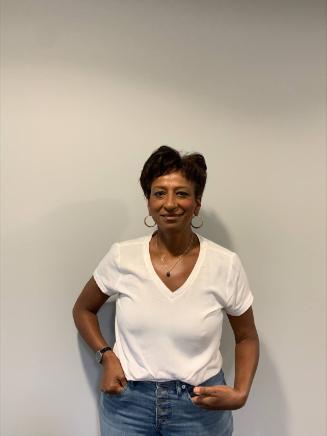
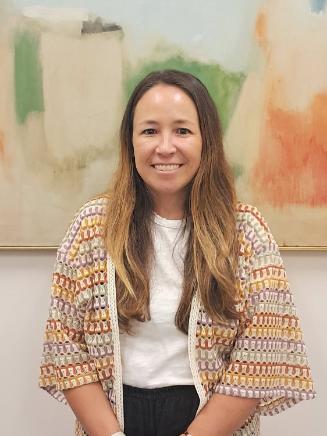
Description(a) Audio file of interview with Sydney Smith. She was interviewed by Paola Evangelista on October 3, 2025 in Hartford, Connecticut. (b) Photograph of Sydney Smith taken at her interview.
Sydney Smith was interviewed as part of the Connecticut Museum of Culture and History's Community History Project discussing moments of change in her life.
Sydney Smith is a sculptor and current Studio Art Fellow at Trinity College, whose work explores material connection, community, and self-reflection, drawing inspiration from the ways people interact with nature and one another. Her most transformative moment came during her sophomore year at Wesleyan University, in her first college-level sculpture class. At first, she approached her work superficially, expecting audiences to impose meaning onto her creations. After the first critique and the insights of how much work and meaning her older peers have poured in their work, she recalls, “I left that critique feeling like, oh my God, this is something that needs to be taken seriously, and I can't just kind of come in and hope that someone creates something out of this.”
Guided by the advice and passion of her mentors, Sydney discovered how art could give shape to what lies deep within. She shared, “I really appreciate is when something that's in my mind that is tangled and hard to speak on and hard to verbalize, can be brought into the world in 3D form and can communicate what I do not have the language for.”
Her experience in sculpture has shown her the power of intentionality, how to focus on what is meaningful and communicate it with care, and she realized she could apply this principle to her own life. Around the same time, Sydney made the difficult decision to step away from the volleyball team. Injuries and a team culture that no longer aligned with her values prompted her to reflect on what truly mattered to her.
By consciously choosing where to invest her time and energy, Sydney moved away from superficial connections and toward pursuits that nurtured her growth, curiosity, and well-being.
Sydney’s breakthrough project of creating a sculpture inspired by Michelangelo’s Prisoners was a turning point in her artistic journey. She credits her mentor, Professor Erika Westman, for encouraging her to think conceptually and to see art as a dialogue rather than a product. Through this process, Sydney began reflecting on how the material world humans create can be influenced by the materials themselves. Now working primarily with wood, she recalls, “I make cuts, and sometimes the wood will hold and stay in its shape, other times I make cuts and the wood falls apart.” For her, this relationship between artist and material parallels the interconnectedness of living systems.
Sydney emphasizes the importance of community, explaining that her friends and family helped her stay grounded and are fundamental for her own growth and art. Sydney’s later works, including her senior exhibition Reciprocity, embody this philosophy. Using locally sourced New England wood, she explores the parallels between tree root systems and human relationships. Sydney’s story reflects the power community in shaping creative identity and growth.
Looking ahead, Sydney sees her practice evolving to engage more deeply with critical questions about industries and consumption. She encourages us to reflect on the demands we place on the world and the environmental impact of human activity. She observes that, just like the trees whose leaves we step on, we too are alive and interconnected with the natural world. Her work will continue to spark conversations about the support systems that sustain us, from community to nature, and reminds us that while “it's really easy to feel like you're another cog in the wheel,” we can also find grounding in those support systems that have existed long before us. As she reflects, “it's nice that there are systems that will feel steady even when everything else is so tumultuous.”
Sydney Smith was interviewed as part of the Connecticut Museum of Culture and History's Community History Project discussing moments of change in her life.
Sydney Smith is a sculptor and current Studio Art Fellow at Trinity College, whose work explores material connection, community, and self-reflection, drawing inspiration from the ways people interact with nature and one another. Her most transformative moment came during her sophomore year at Wesleyan University, in her first college-level sculpture class. At first, she approached her work superficially, expecting audiences to impose meaning onto her creations. After the first critique and the insights of how much work and meaning her older peers have poured in their work, she recalls, “I left that critique feeling like, oh my God, this is something that needs to be taken seriously, and I can't just kind of come in and hope that someone creates something out of this.”
Guided by the advice and passion of her mentors, Sydney discovered how art could give shape to what lies deep within. She shared, “I really appreciate is when something that's in my mind that is tangled and hard to speak on and hard to verbalize, can be brought into the world in 3D form and can communicate what I do not have the language for.”
Her experience in sculpture has shown her the power of intentionality, how to focus on what is meaningful and communicate it with care, and she realized she could apply this principle to her own life. Around the same time, Sydney made the difficult decision to step away from the volleyball team. Injuries and a team culture that no longer aligned with her values prompted her to reflect on what truly mattered to her.
By consciously choosing where to invest her time and energy, Sydney moved away from superficial connections and toward pursuits that nurtured her growth, curiosity, and well-being.
Sydney’s breakthrough project of creating a sculpture inspired by Michelangelo’s Prisoners was a turning point in her artistic journey. She credits her mentor, Professor Erika Westman, for encouraging her to think conceptually and to see art as a dialogue rather than a product. Through this process, Sydney began reflecting on how the material world humans create can be influenced by the materials themselves. Now working primarily with wood, she recalls, “I make cuts, and sometimes the wood will hold and stay in its shape, other times I make cuts and the wood falls apart.” For her, this relationship between artist and material parallels the interconnectedness of living systems.
Sydney emphasizes the importance of community, explaining that her friends and family helped her stay grounded and are fundamental for her own growth and art. Sydney’s later works, including her senior exhibition Reciprocity, embody this philosophy. Using locally sourced New England wood, she explores the parallels between tree root systems and human relationships. Sydney’s story reflects the power community in shaping creative identity and growth.
Looking ahead, Sydney sees her practice evolving to engage more deeply with critical questions about industries and consumption. She encourages us to reflect on the demands we place on the world and the environmental impact of human activity. She observes that, just like the trees whose leaves we step on, we too are alive and interconnected with the natural world. Her work will continue to spark conversations about the support systems that sustain us, from community to nature, and reminds us that while “it's really easy to feel like you're another cog in the wheel,” we can also find grounding in those support systems that have existed long before us. As she reflects, “it's nice that there are systems that will feel steady even when everything else is so tumultuous.”
Object number2024.79.78a-b
NotesSubject Note: The Connecticut Museum of Culture and History’s Community History Project (CHP) is a public-facing initiative, focused on contemporary collecting, gathering items of the recent past as well as from events happening today. This program developed community historians to identify, document, and preserve their experiences as residents of Connecticut, and to share these experiences during a series of community presentations. The project focused on the theme "Redefining Moments of Change." Conneticans share stories of people or events who have changed their lives or how they have sparked change in the lives of others.Cataloging Note: Digitization and access to this collection is supported by a Congressionally Directed grant through the U.S. Department of Education.
Subject Terms
CTDA Handle: Watch/Listen on the Connecticut Digital Archive
https://hdl.handle.net/11134/4065491
On View
Not on view

10 July 2025